AIEGNOS
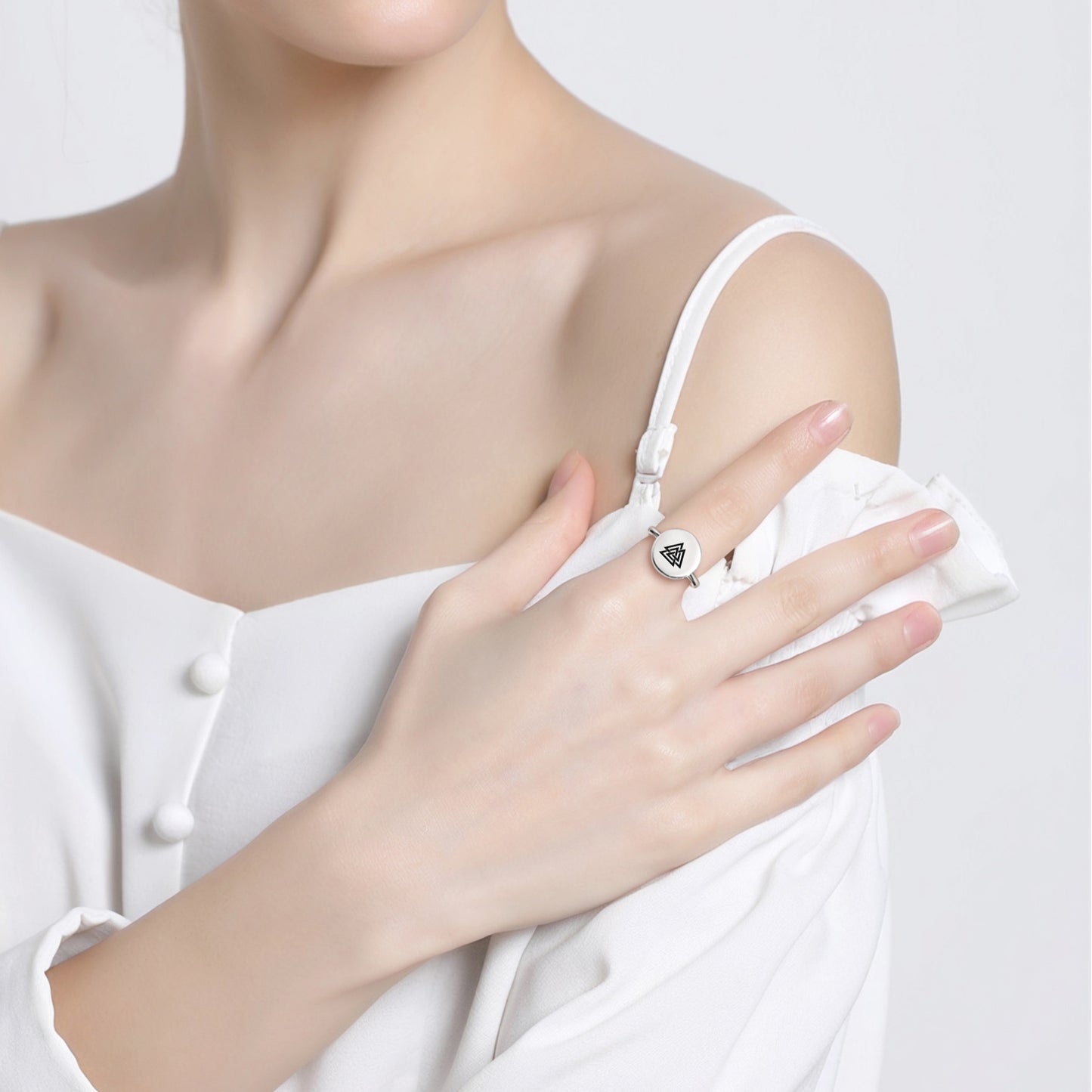
Valknut Symbol Adjustable Open Ring
Valknut Symbol Adjustable Open Ring
BUY 2 GET 2 FREE SITEWIDE
BUY 2 GET 2 FREE SITEWIDE
Nie można załadować gotowości do odbioru
The Valknut is a symbol composed of three interlocking triangles, often called the 'Knot of the Slain' or 'Death Knot,' also known as the 'Odin Knot.' This symbol holds important symbolic meaning in Norse mythology, especially in cultural contexts related to fallen warriors and the god Odin.
The name Valknut is a modern creation, derived from two words: 'valr' meaning 'slain warrior' and 'knut' meaning 'knot.' Thus, the Valknut can be understood as the 'Knot of the Slain,' symbolizing those warriors who died in battle.
In ancient times, the Valknut frequently appeared on artifacts from Norse and Germanic regions, such as swords, shields, and runestones. It is believed to be related to Odin, as Odin is the Norse god of war and death who leads fallen warriors to Valhalla, the Hall of the Slain.
The Valknut has two main design forms: one with three independent but interwoven triangles, and another with a continuous pattern formed by a single line. Both forms have been found archaeologically and are usually considered different representations of the same symbol.
In modern times, the Valknut is widely used in various cultural products such as jewelry, tattoos, and clothing designs. Although its original meaning remains unclear, its design and symbolic significance have made it a popular symbol. However, it is worth noting that the Valknut has also been adopted by some extremist groups, particularly in white supremacist movements, which gives it negative connotations in certain contexts.
Additionally, the Valknut is related to Norse legends of the Nine Worlds, symbolizing the cycle of life, death, and rebirth. It is also regarded as an amulet that can bring strength and courage to the wearer.
The Valknut is a complex and symbolically rich symbol whose history can be traced to ancient Norse and Germanic cultures, although its specific meaning still has multiple interpretations and uses in modern times.
Share